Under modern conditions, the issue of transferring newly
built vessels from shipyards to their home ports has become
particularly acute. This is due both to river shallowing and
a trend where shipyards win construction tenders for vessels
whose lightship drafts exceed the depths of the navigable
fairway.
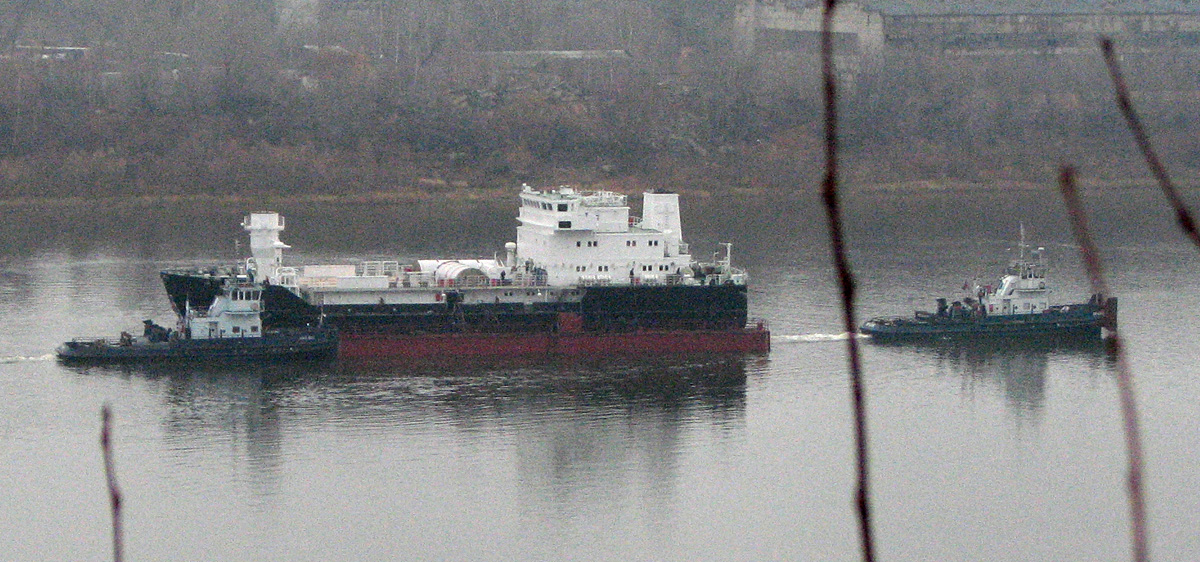
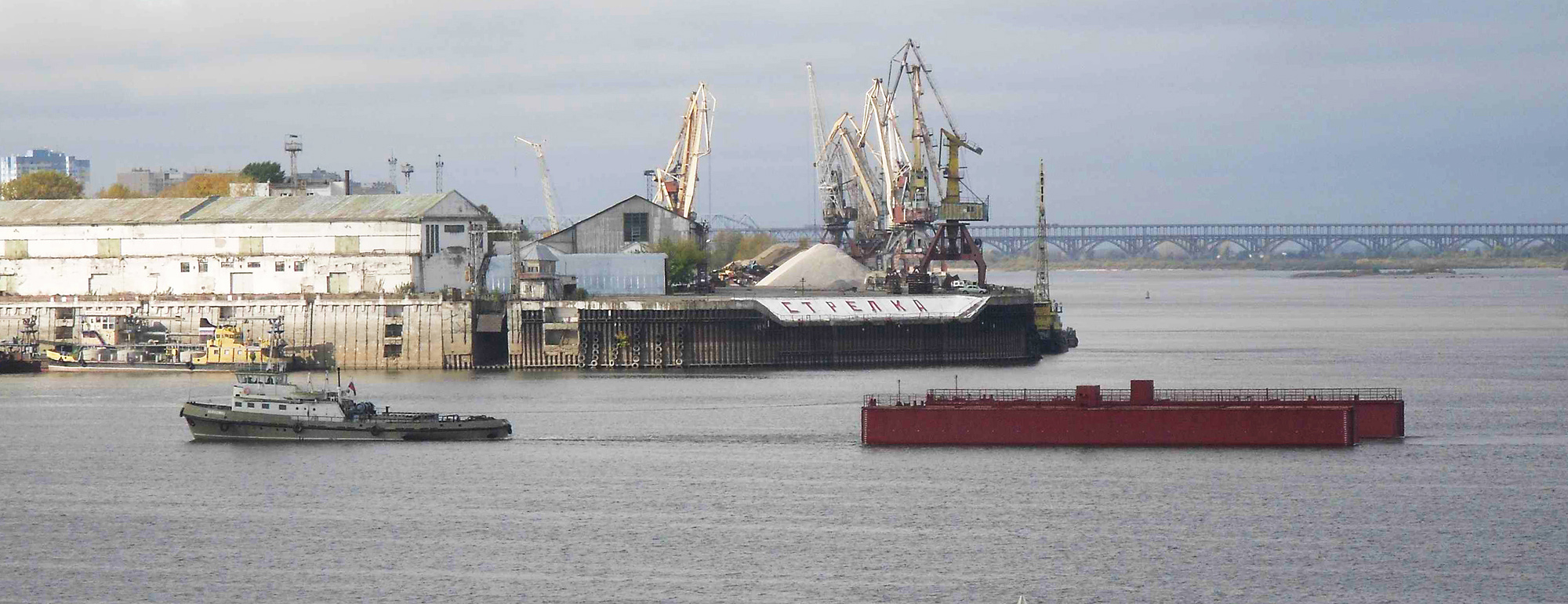
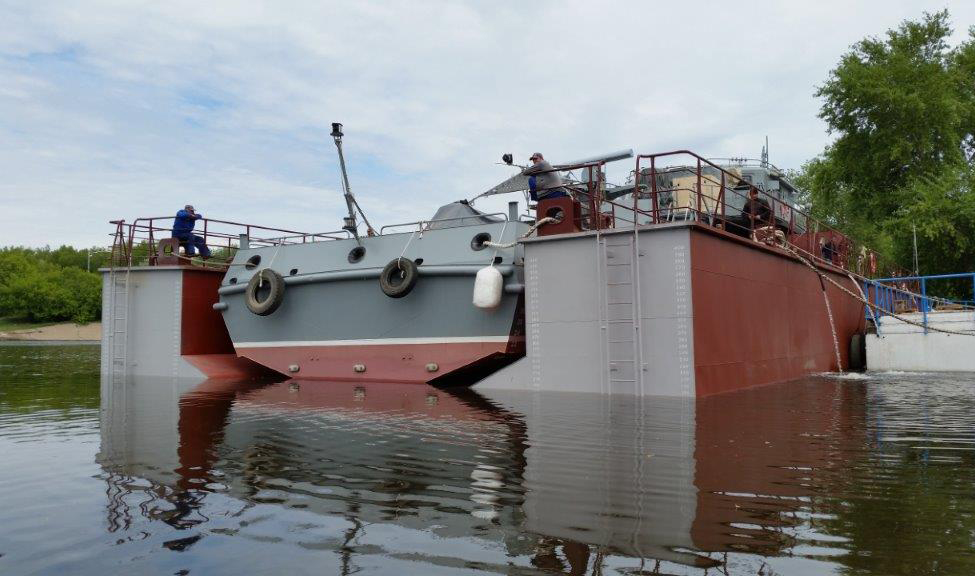
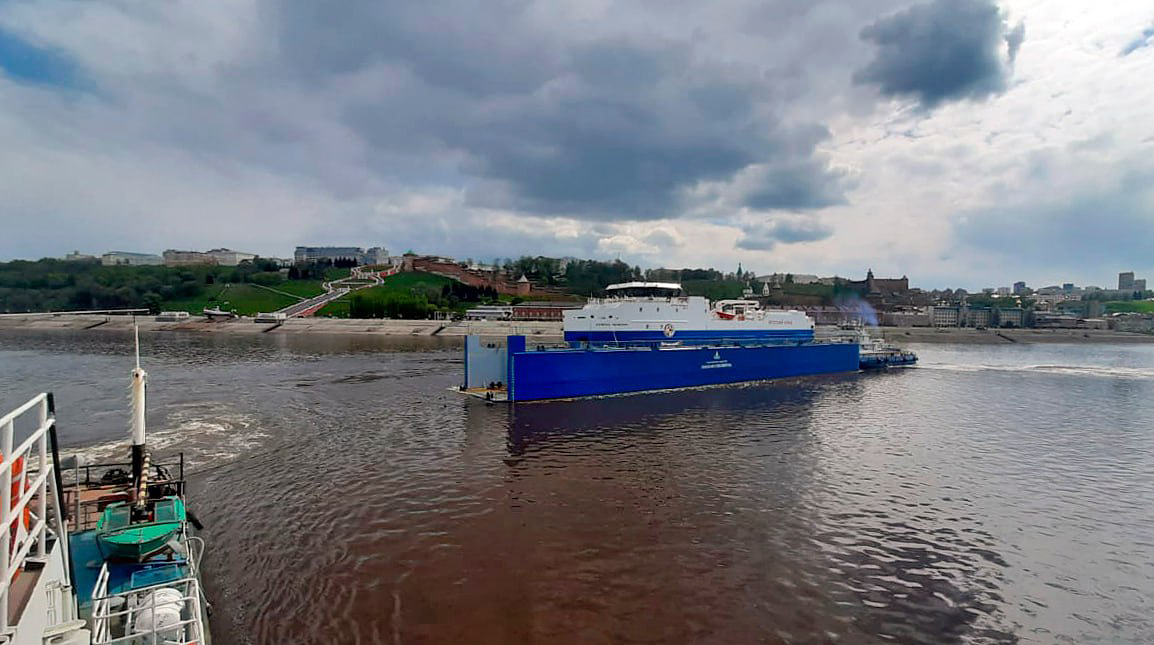
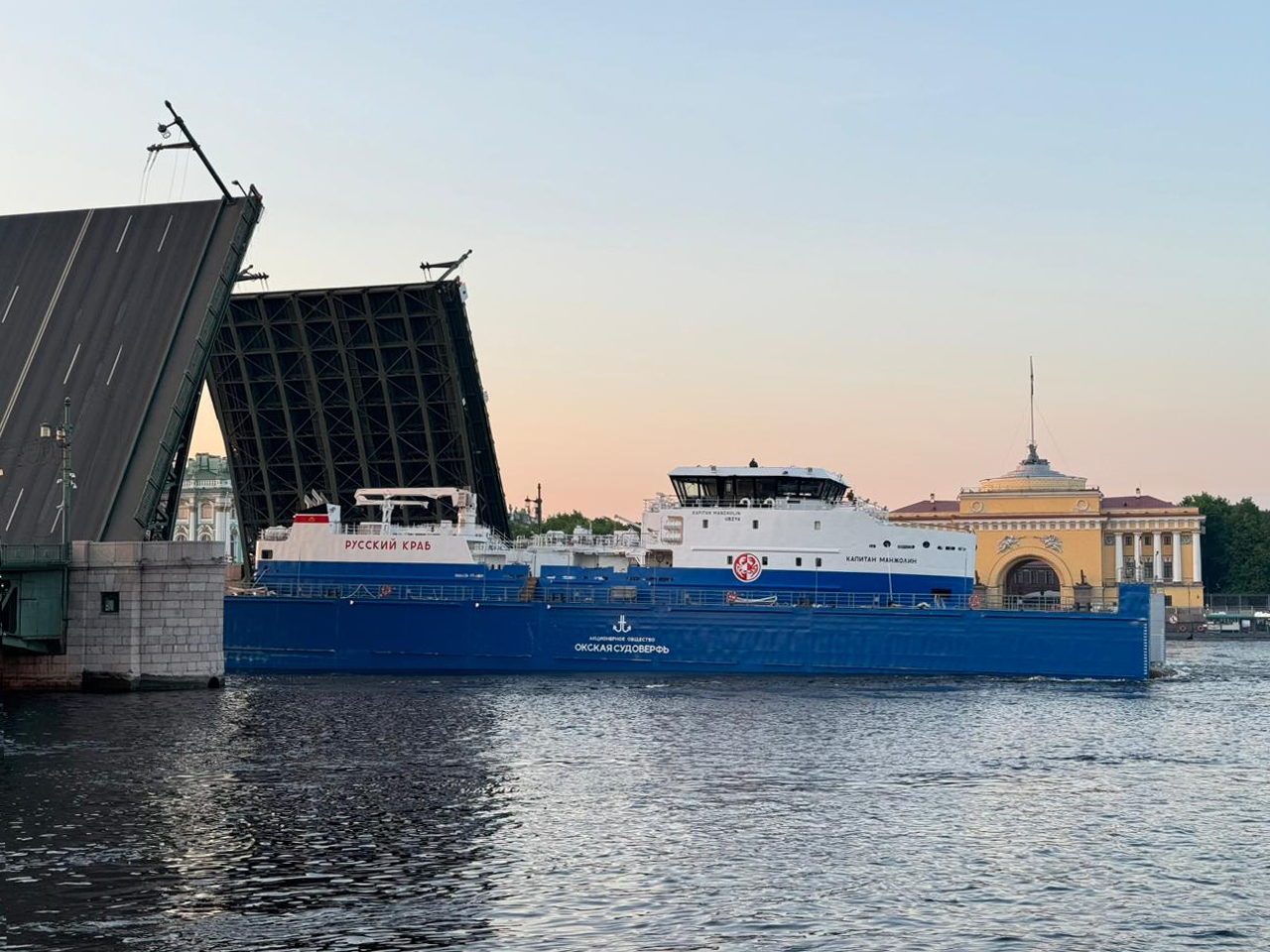
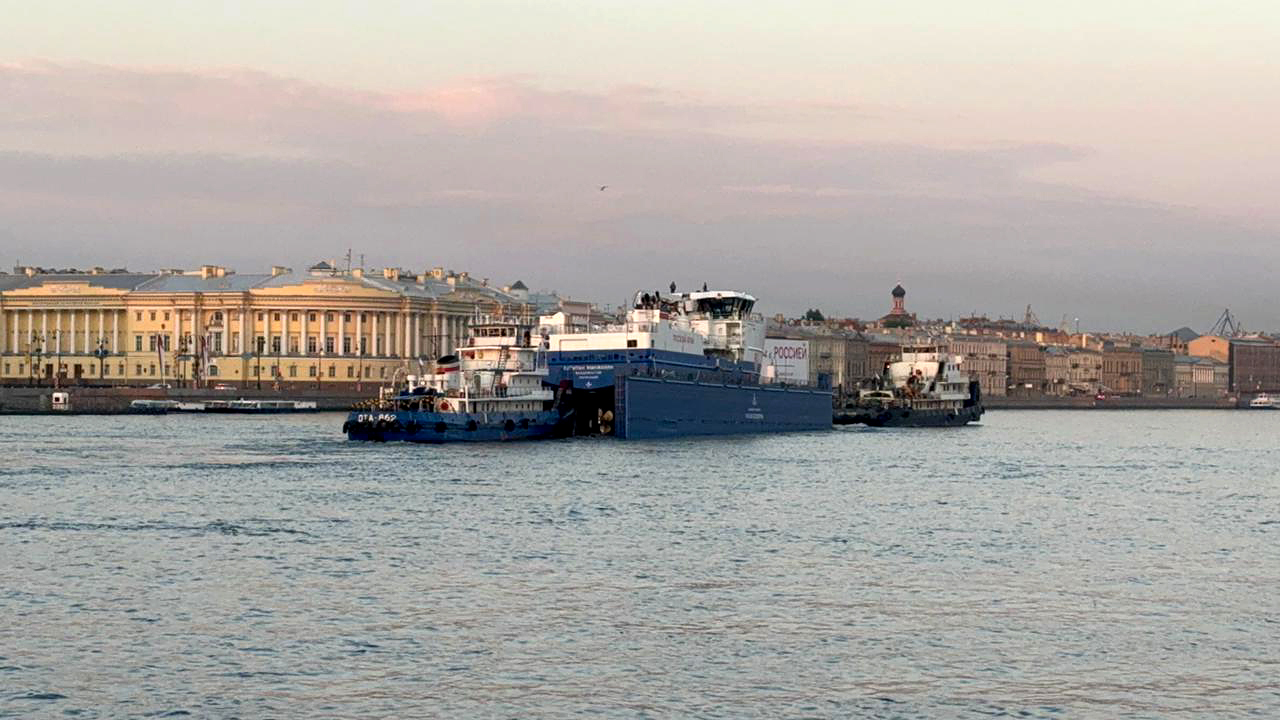
A unique pontoon system (specialized technological
equipment) was first designed in 2009 by specialists from
the SeaTech Design Bureau. It was developed to facilitate
the shallow-water passage of vessels with drafts up to 3.2 m
through the Oka River, where the fairway depth is
approximately 1.8 m.
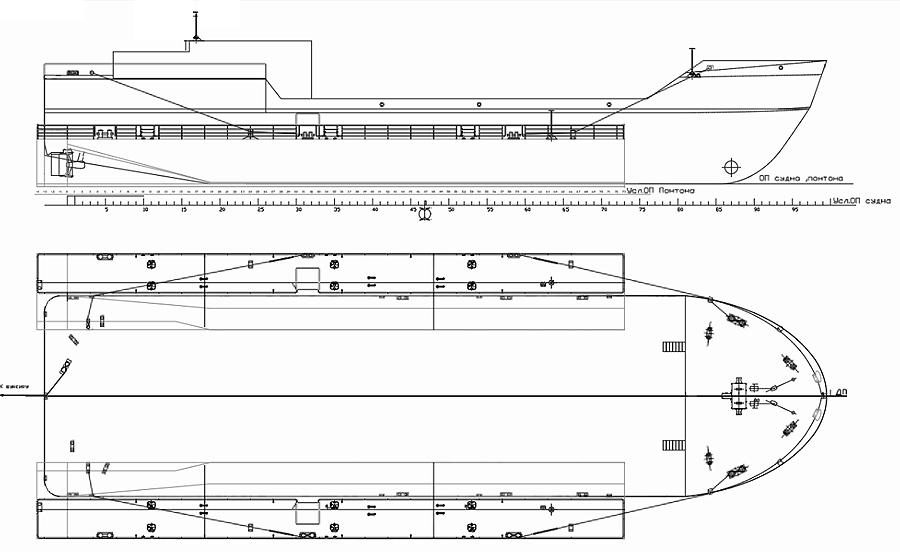
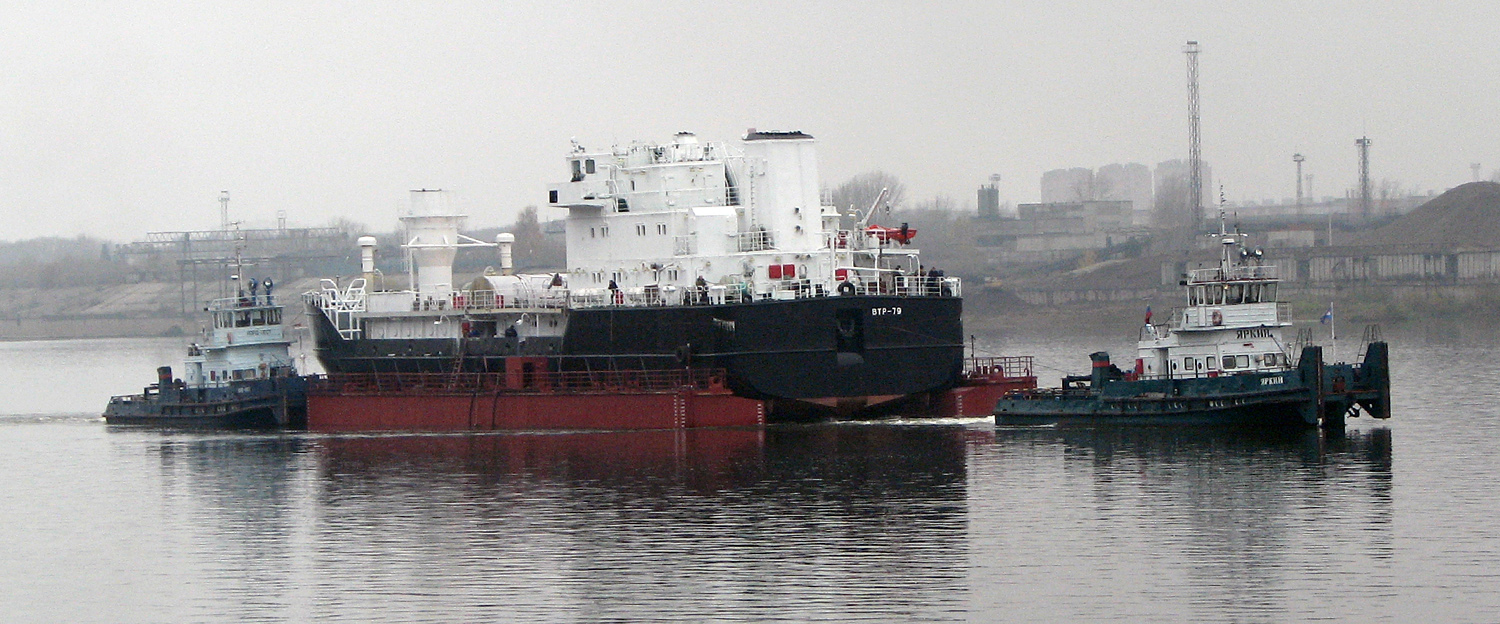
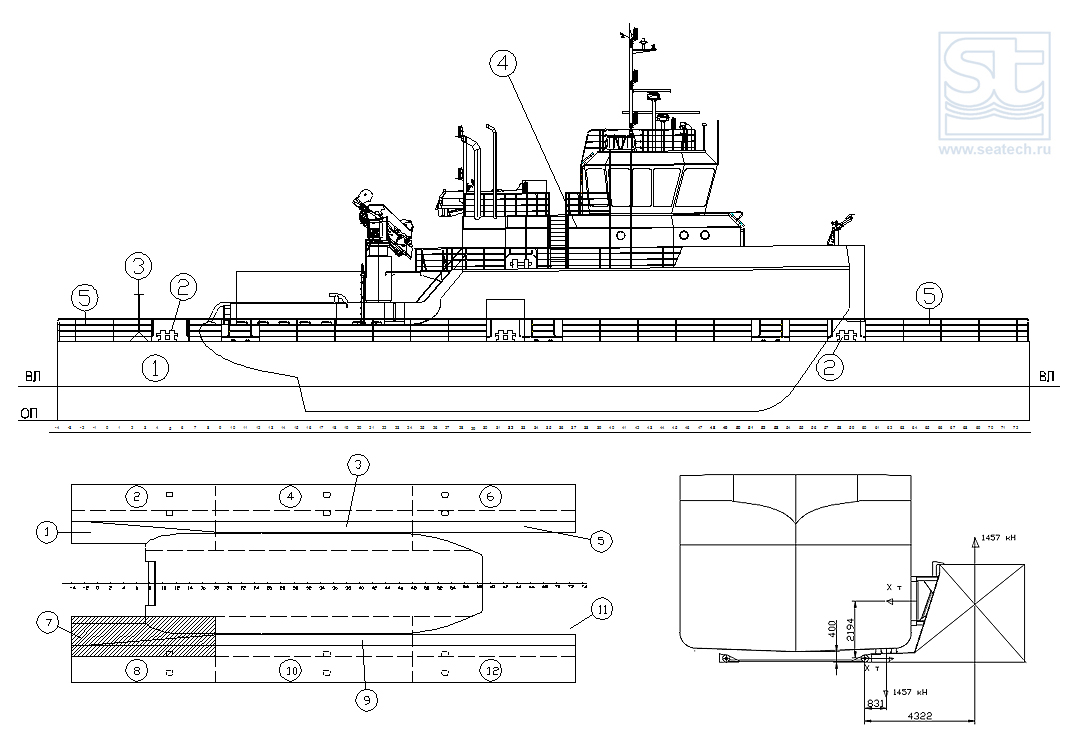
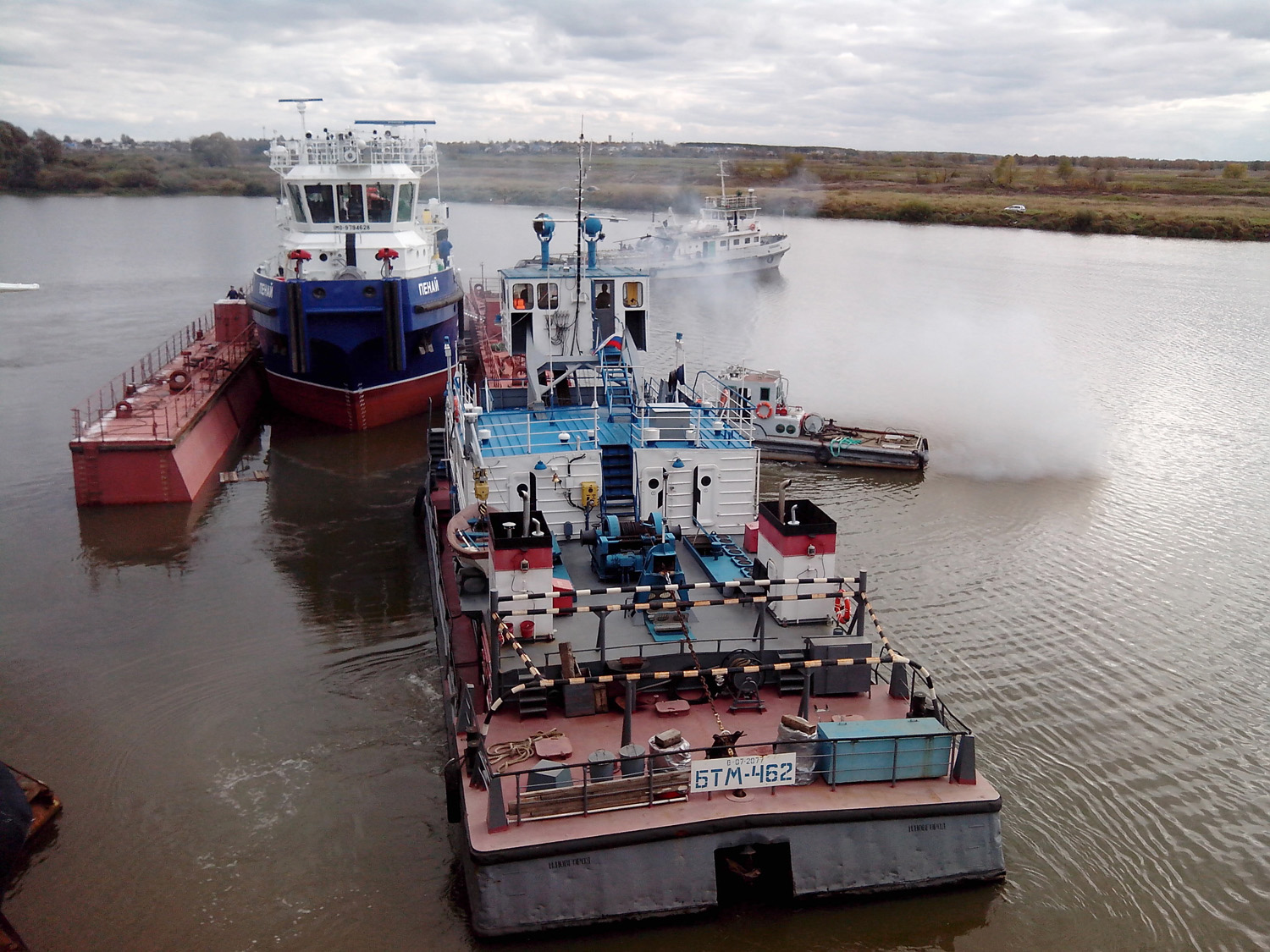
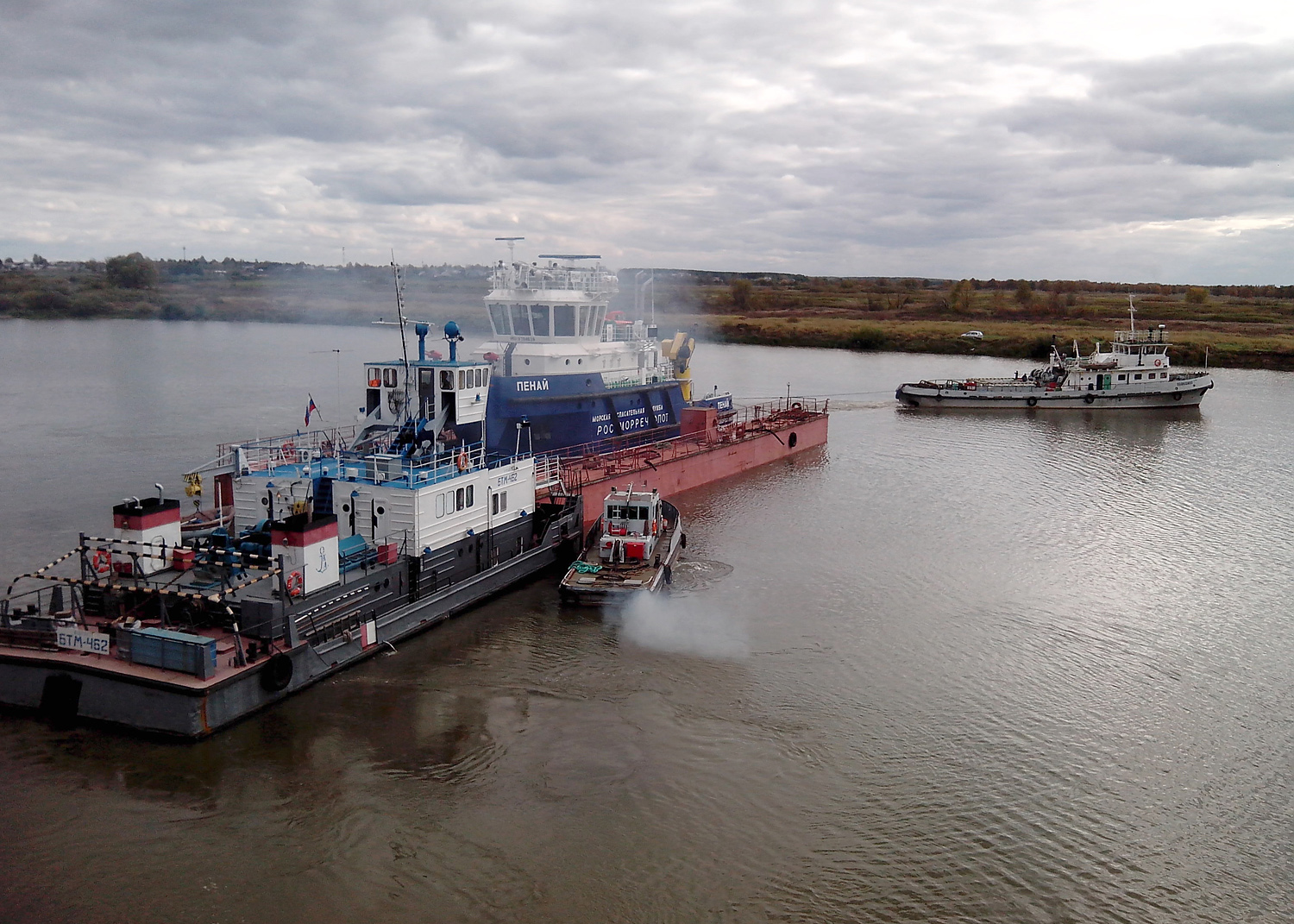
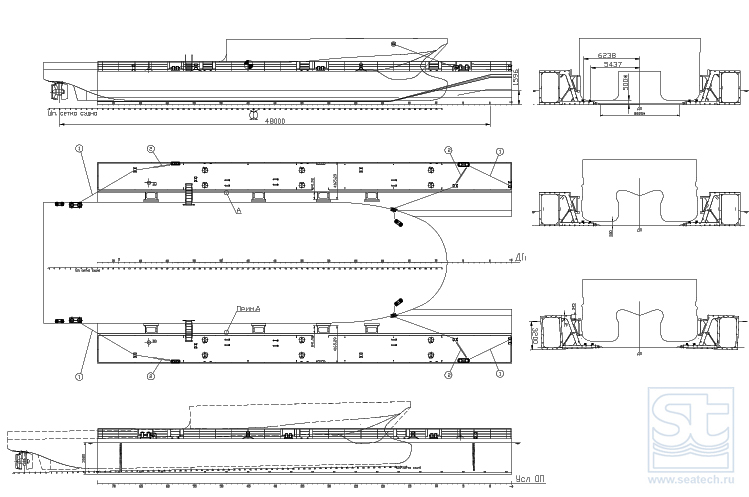
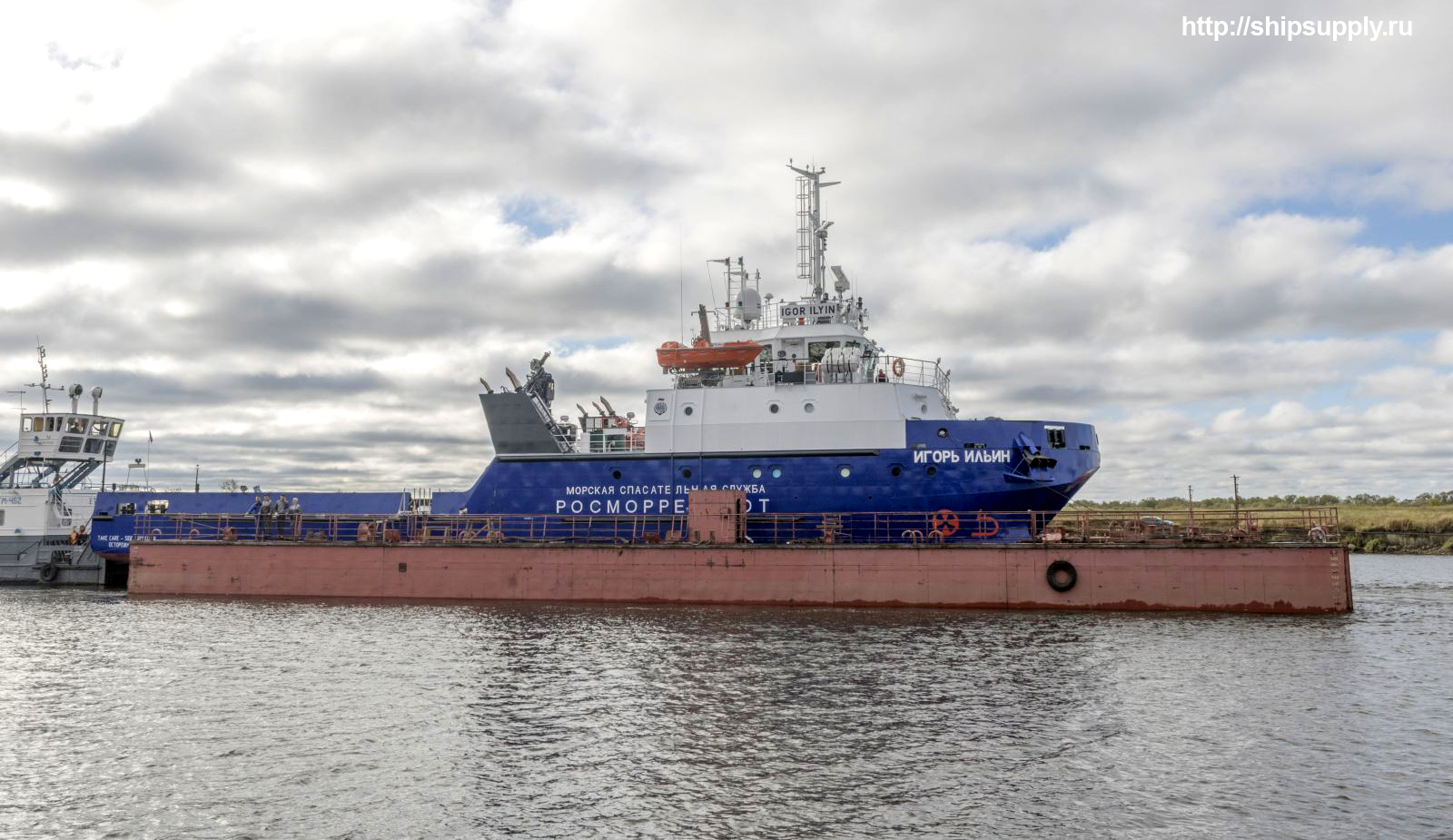
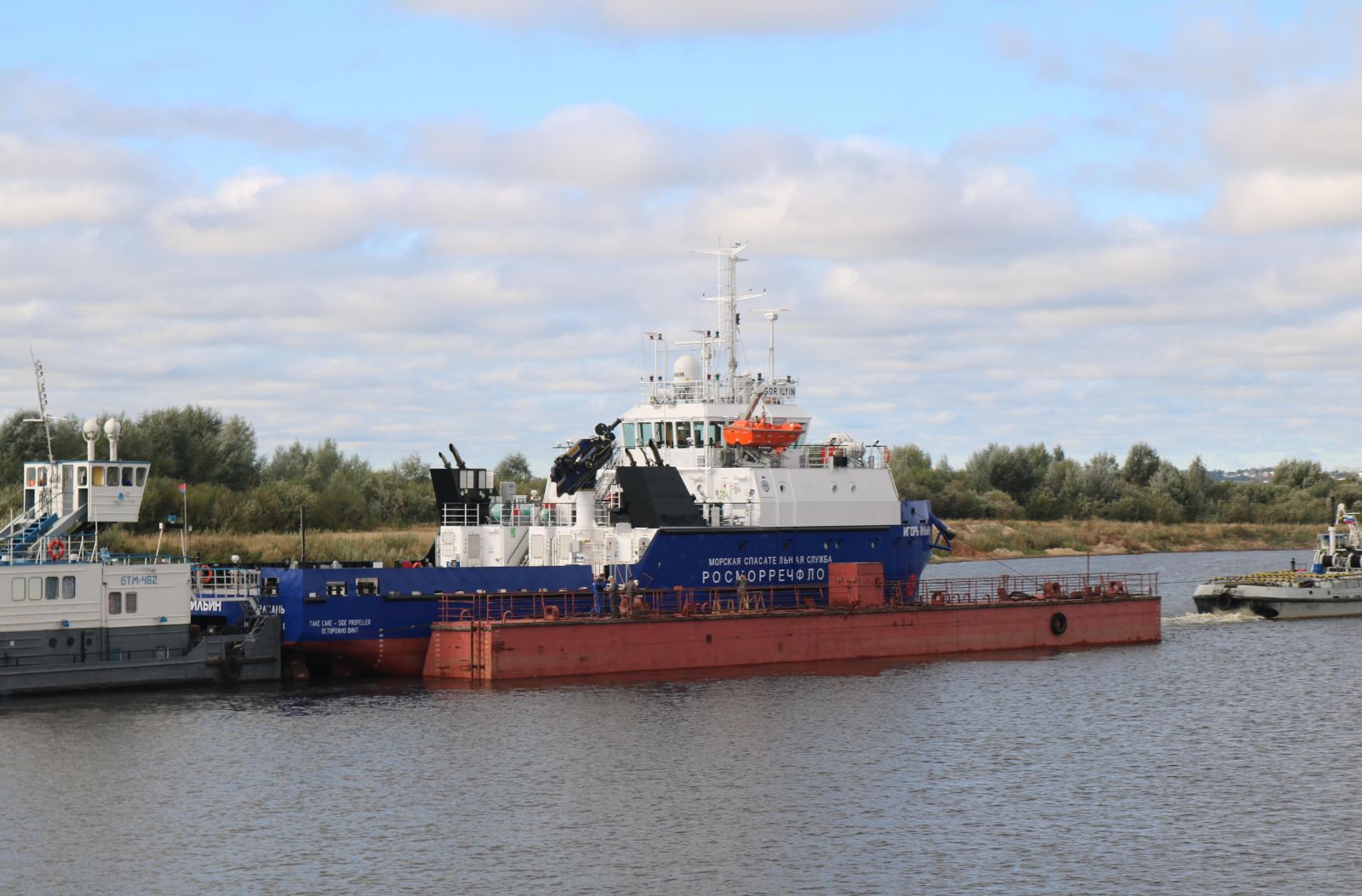
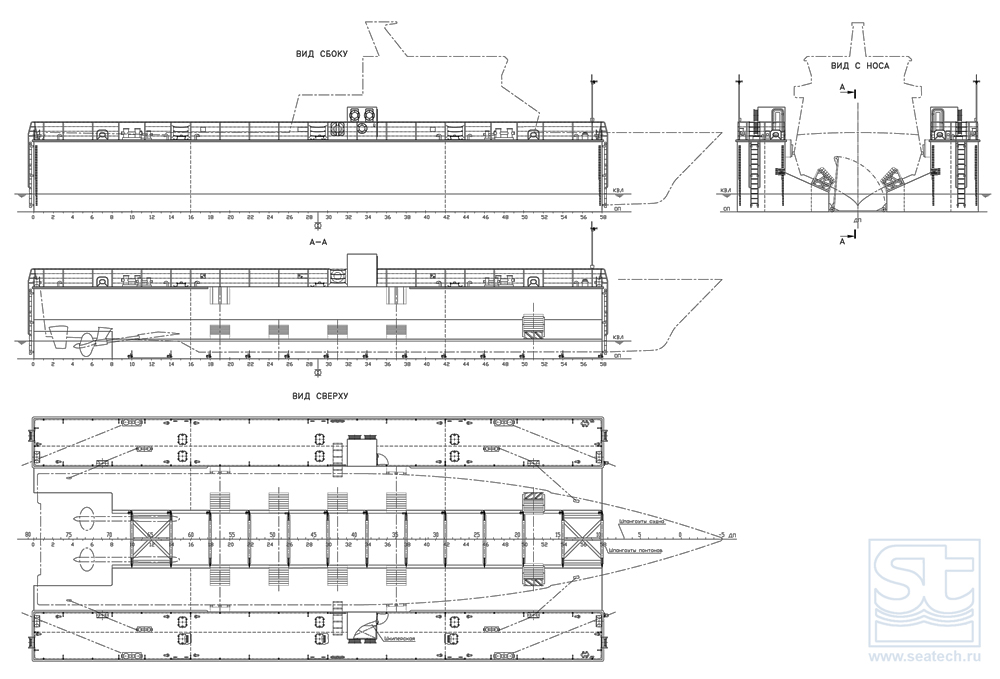
This unloading pontoon system, designated as Project
20360PP, consisted of two pontoons connected by tie rods
(each measuring 46.2 x 6.0 x 3.75 m) and was originally
intended for a vessel with a displacement of about 1,500
tons. The system successfully maintained the draft of the
combined vessel-pontoons assembly within the fairway
limits.
The scope of the project included:
- Stability and strength
calculations for the vessel-pontoon system during
dry-docking onto the pontoons and subsequent
transit;
- Development of technology for docking the vessel
onto the pontoons and its launching/undocking;
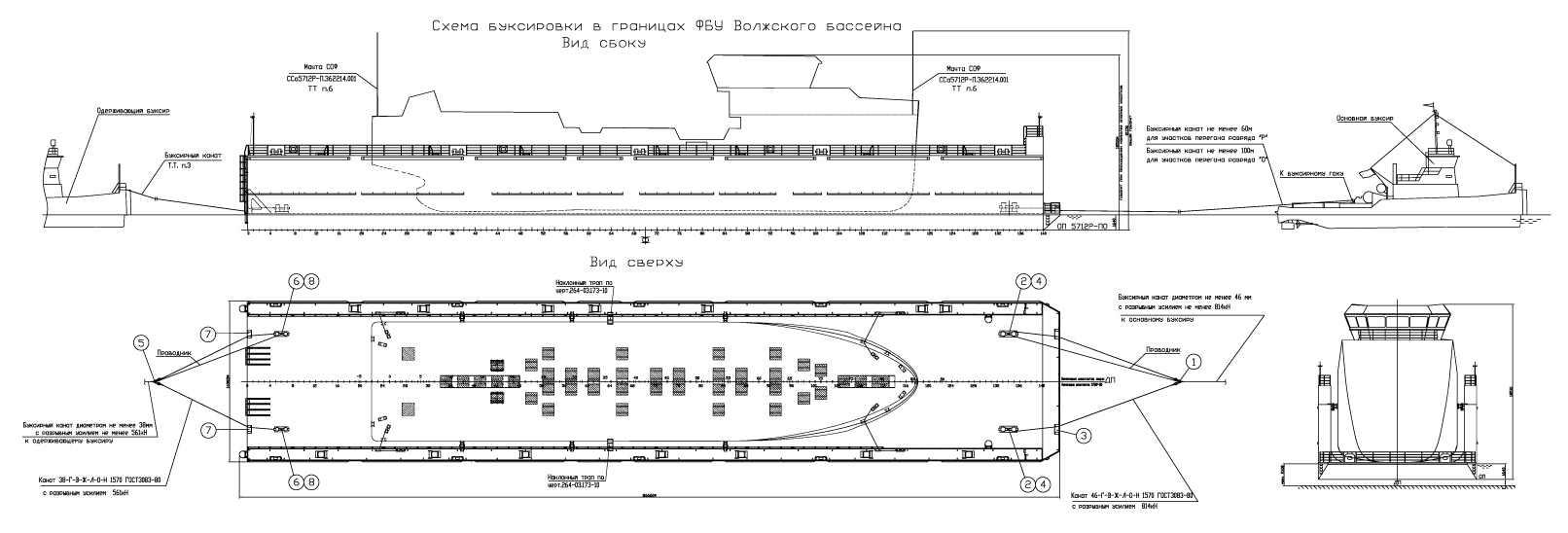
- Towing and
securing arrangements for the vessel on the pontoons;
- Detail
design documentation for the manufacturing of the
pontoon system.
The transit project was approved by the Russian River
Register and successfully executed.
With minor modifications (Project TG17PP), this
pontoon system (specialized technological equipment) also
enabled the transfer of a seagoing tug with a displacement
of about 500 tons from the Oka Shipyard to deep water.
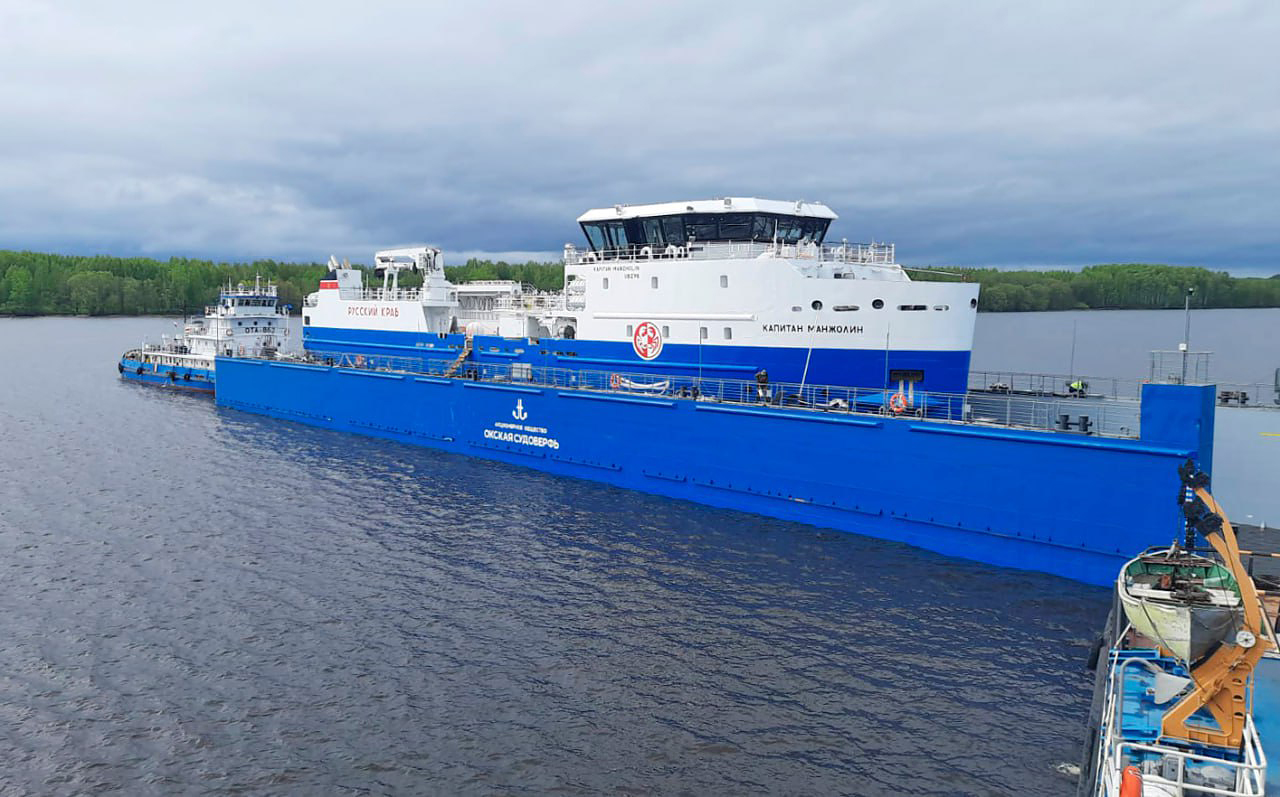
In 2016, the next modification of the pontoon system—Project
250PP—was designed and built for the transfer of
high-speed, deep-V hull vessels with a displacement of about
240 tons. The dimensions of a single pontoon are L x B x H =
34.8 x 5.6 x 4.4 m.
The development of specialized technological equipment for
the transit of various vessels continued in subsequent
years.
................
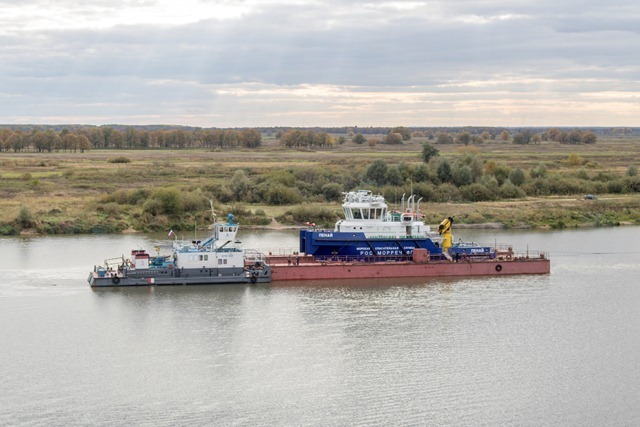
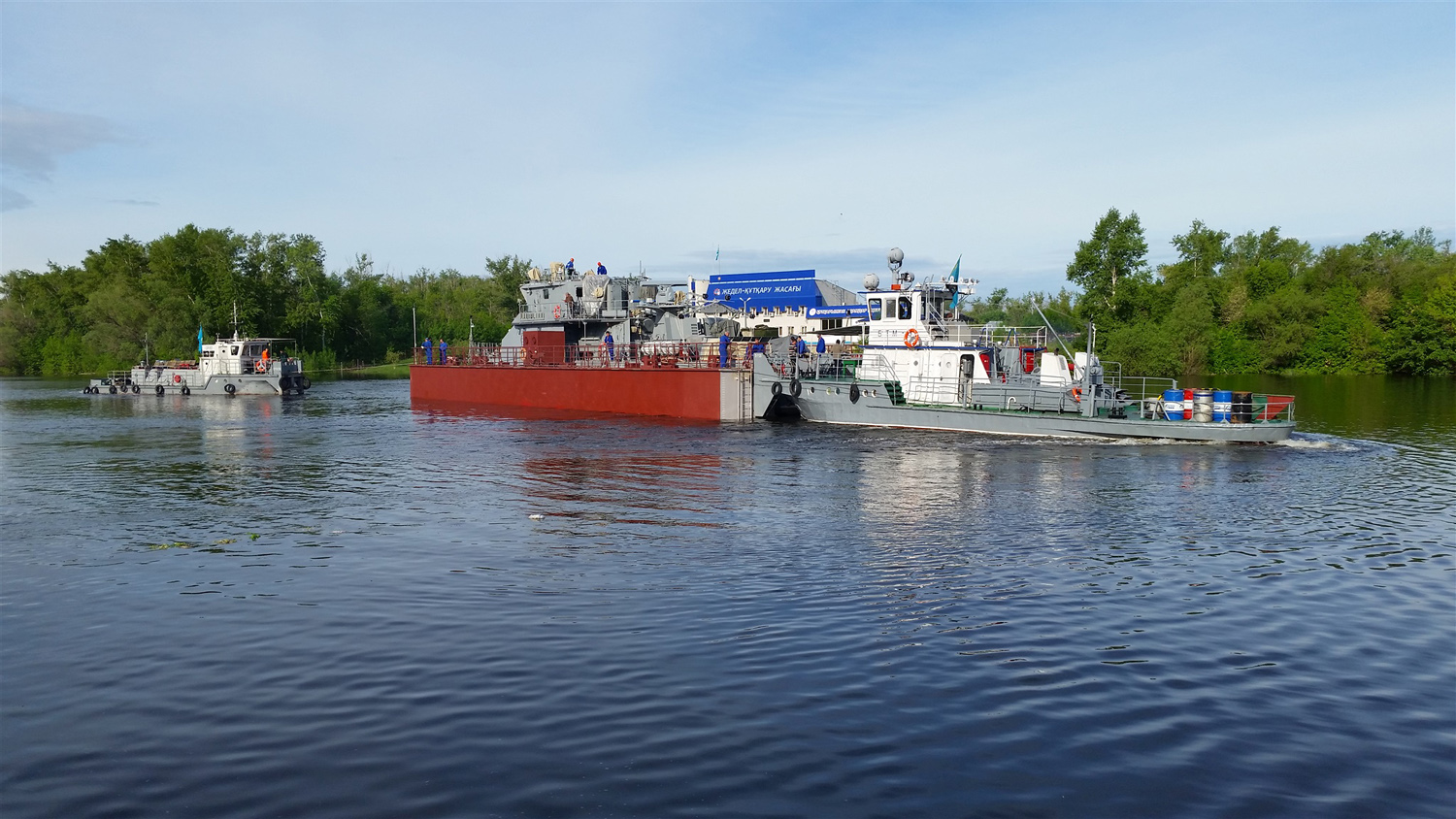
June 2026. A technological solution has been implemented for
the transit of the multifunctional supply vessel D.
Konaev.
A complex technical phase has been completed for the
transfer of the new Project P4240 multifunctional
auxiliary supply vessel, D. Konaev, built at the
Zenit shipyard, from Uralsk to the Caspian Sea. Specialized
technological equipment developed by the SeaTech Design
Bureau played a key role in the successful transit of the
vessel.
The technology enabled the passage of the vessel, which has
a design draft of 3.5 m, through river sections with depths
of less than 1.5 m. The logistics were organized taking into
account dimensional restrictions, including the dismantling
of the mast for passage under the bridge in Atyrau. Final
outfitting is scheduled to take place at the Port of Aktau,
after which the vessel will be delivered to the customer.
We appreciate the opportunity to apply our technologies in
real-world conditions and continue working on their
improvement.

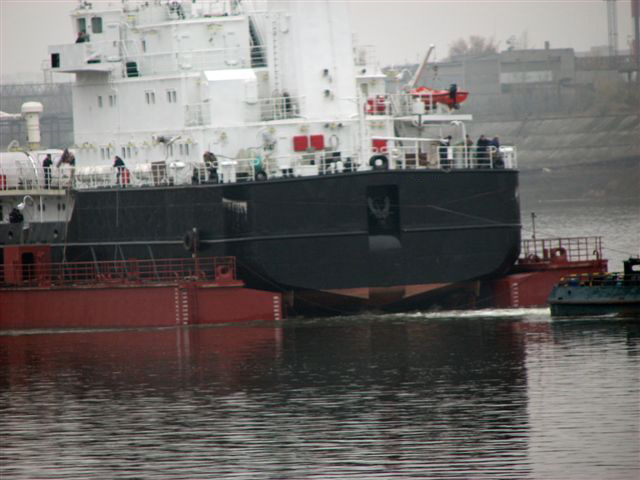
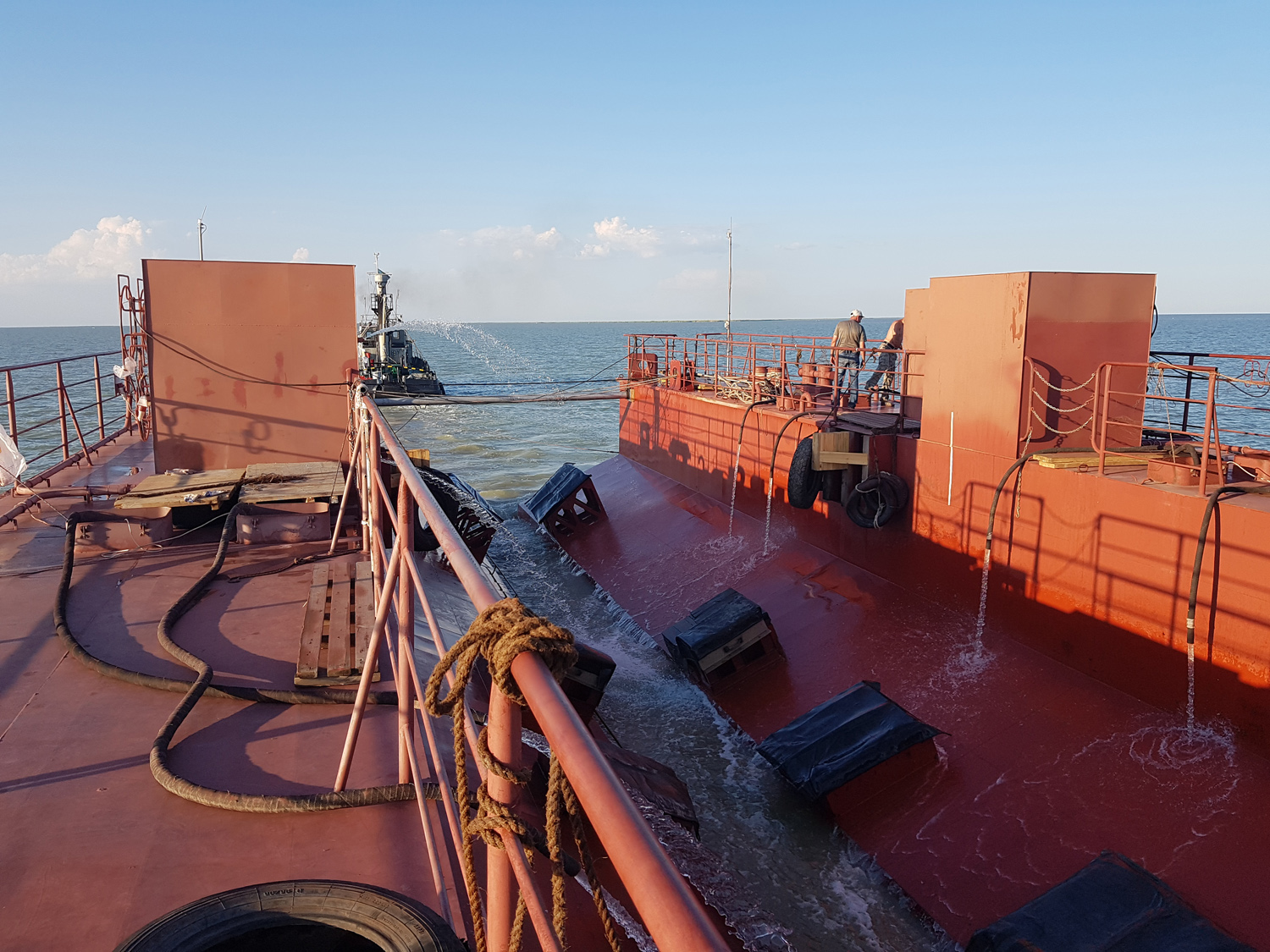
Unique features of the vessel-pontoons complex:
* The vessel is secured on the pontoons
by its own weight without the need to weld structural
brackets to the vessel hull.
* After ballast is pumped out, the vessel
is additionally clamped by the pontoons along its sides,
turning the entire system into a single unit.
* A water area depth of just 0.4 m more
than the vessel draft is sufficient for docking the vessel
onto the pontoons.
* Asymmetric L-shaped pontoons are
connected by a flexible coupling system, which
simultaneously provides both mobility and rigidity to the
entire structure.
* The vessel is placed on wooden keel
blocks, making the pontoon system highly versatile for
vessels with various hull lines.
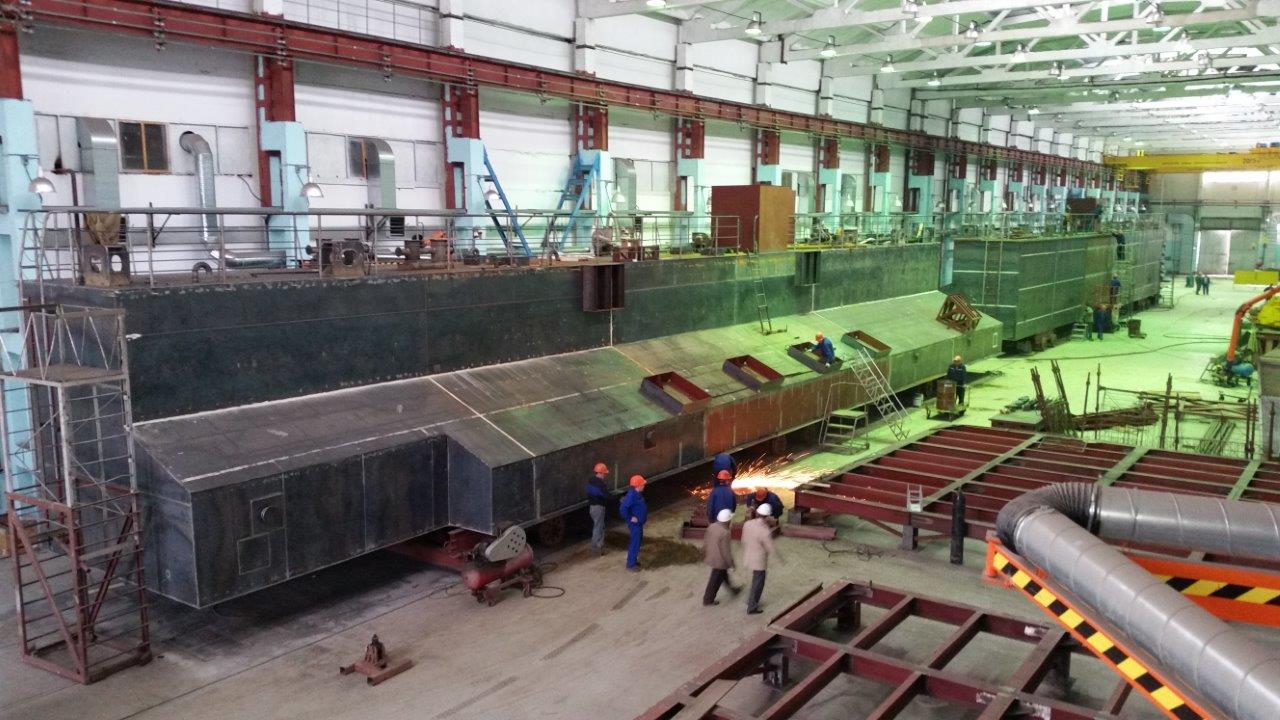
The pontoon system is simple to
manufacture and operate, and the pontoons do not require
expensive ballast equipment. The use of such structures
helps solve a wide range of tasks—from delivering a vessel
from the shipyard to the customer, to relocating fleets
across inland waterways.